

Building Stronger Payment Operations Through Smart Monitoring
Systematic transaction oversight goes beyond basic payment processing to create comprehensive operational intelligence. This approach helps businesses identify optimization opportunities, prevent revenue losses, and build stronger customer relationships through improved payment experiences.
Foundation Elements of Effective Monitoring
Step 1: Data Collection Strategy
Establish comprehensive data gathering across all payment channels, ensuring complete visibility into transaction flows, customer interactions, and system performance metrics.
Step 2: Pattern Recognition Development
Create baseline understanding of normal operational patterns, customer behaviors, and seasonal variations that inform future analysis and decision-making processes.
Step 3: Anomaly Detection Framework
Implement systematic approaches for identifying unusual activities, performance deviations, and potential issues that require investigation or intervention.
Step 4: Response Development
Develop clear procedures for addressing identified concerns, escalating critical issues, and maintaining operational continuity during investigations.
Step 5: Continuous Improvement Integration
Build feedback mechanisms that enable ongoing refinement of monitoring processes, detection accuracy, and response effectiveness.
Operational Benefits of Systematic Monitoring
Comprehensive transaction oversight delivers measurable improvements across multiple business dimensions, creating cumulative value that extends beyond immediate payment processing concerns.
Performance Enhancement Areas:
- Processing Efficiency - Streamlined transaction handling reduces delays and improves customer experiences
- Revenue Protection - Early problem detection prevents losses and maintains financial stability
- Customer Satisfaction - Smooth payment experiences build trust and encourage repeat business
- Operational Insights - Data-driven understanding supports strategic planning and resource allocation
- Risk Mitigation - Proactive threat detection protects against various operational vulnerabilities
Strategic Monitoring Architecture
Effective monitoring systems require thoughtful architecture design that balances comprehensive coverage with manageable complexity. Strategic architecture considerations ensure monitoring capabilities scale with business growth.
Architecture Design Principles:
- Scalability planning that accommodates business expansion and increased transaction volumes
- Integration capabilities that connect monitoring systems with existing business tools
- Flexibility requirements that enable adaptation to changing business needs
- Performance optimization that maintains system responsiveness under various load conditions
- Data retention policies that balance analytical needs with storage cost management
Building Monitoring Excellence
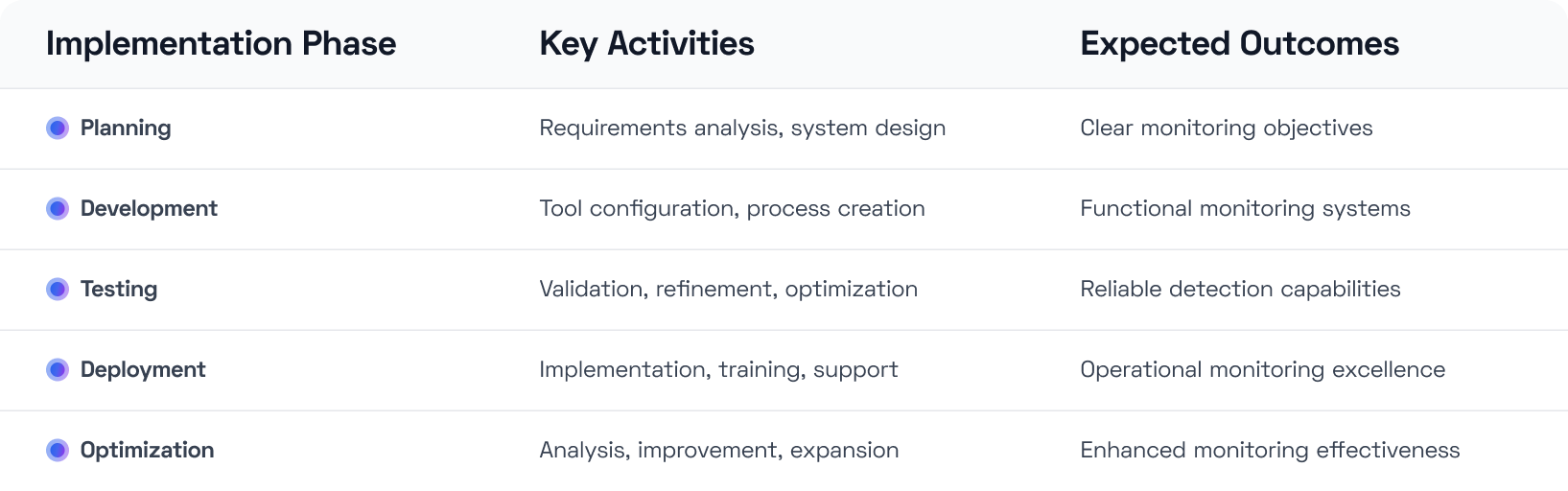
Critical Success Factors: Leadership commitment ensures that monitoring initiatives receive adequate resources and organizational support. Clear communication about monitoring objectives helps build organizational buy-in and user adoption.
Appropriate technology selection balances functionality with usability to ensure that monitoring tools actually get used effectively. Regular training and support help users maximize monitoring system value while building organizational capabilities.
Cross-Functional Integration Strategies
Modern monitoring systems work best when integrated across different business functions rather than operating in isolation. Cross-functional integration creates comprehensive business intelligence that supports various decision-making processes.
Integration Opportunities:
→ Customer service teams gain insights for proactive support and issue resolution
→ Marketing departments understand customer behavior patterns for campaign optimization
→ Finance teams receive operational performance data for budget planning and forecasting
→ Product development groups learn from user interaction patterns and preferences
→ Executive leadership accesses strategic performance indicators for business planning
Quality Assurance and Validation
Monitoring system effectiveness depends on consistent quality standards that ensure reliable detection and accurate analysis. Quality assurance processes validate system performance and identify improvement opportunities.
Quality Validation Methods:
- Regular accuracy testing that confirms detection capabilities across various scenarios
- Performance benchmarking that compares system effectiveness against established standards
- User feedback collection that identifies practical usage challenges and improvement needs
- System reliability monitoring that ensures consistent operation under different conditions
- Process effectiveness measurement that evaluates overall monitoring program success
Conclusion
Strategic transaction monitoring creates operational advantages that strengthen business performance while protecting revenue and enhancing customer relationships.